
Durability
Rubber coating for reinforced durability.
🚚 Free delivery on orders over SAR 299* | Excludes heavy items
Cookie Policy
I agree to the processing of my data in accordance with the terms set out in the Privacy Policy.Cart
Your cart is empty


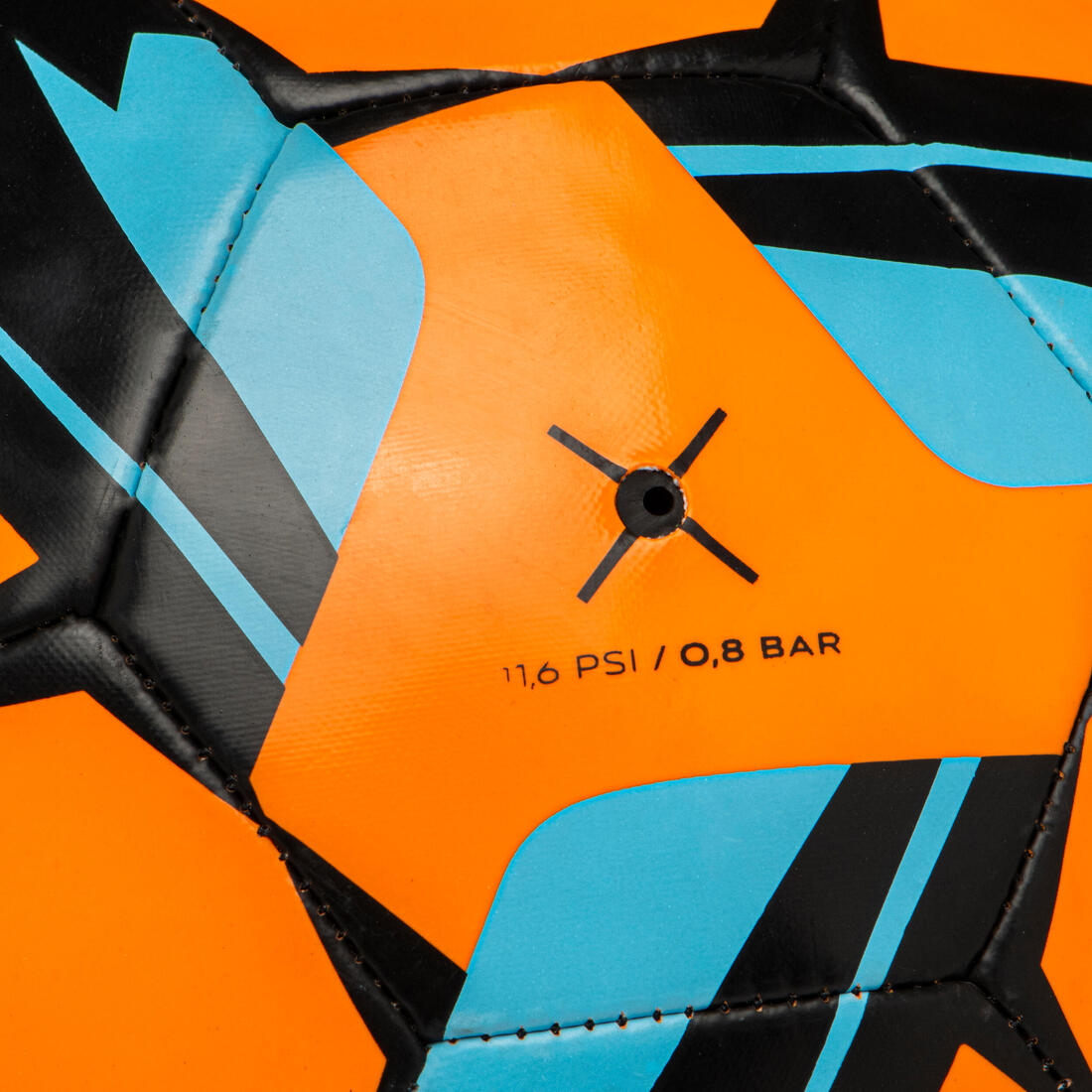
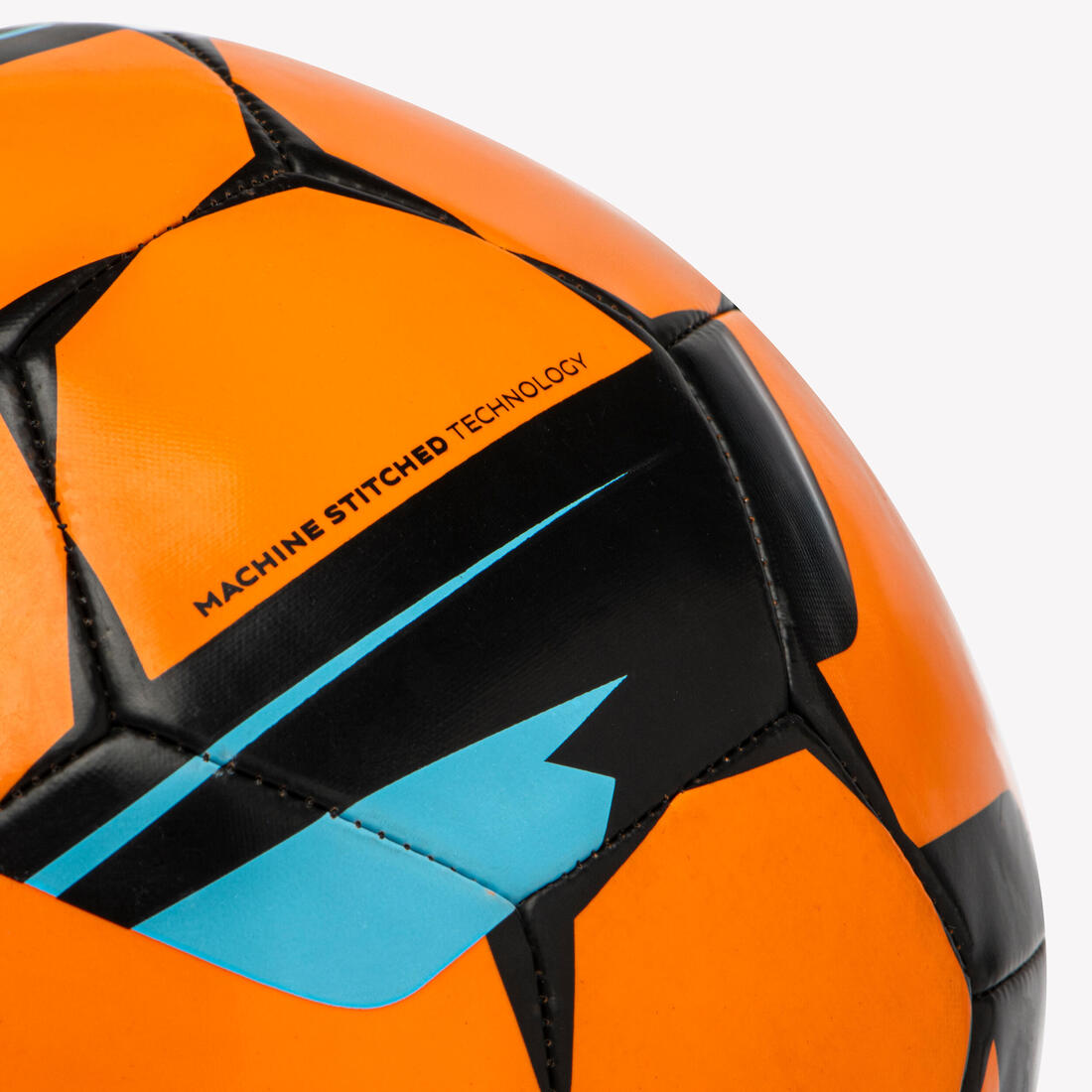
Looking for a durable ball for your club? The Training Ball Resist provides improved durability without losing its comfortable feel, perfect for taking your first steps in football.
Training ball resist size 5, machine stitched, rubber coating - orange
8978845 / 5 / برتقالي
Decathlon Mall Of Arabia
Mon–Thu & Sat–Sun: 09:30–23:00 | Fri: Closes at 23:00
Decathlon Al Hamra Mall
Mon–Thu & Sat–Sun: 09:30–23:00 | Fri: Closes at 23:00
Decathlon The View
Mon–Thu & Sat–Sun: 09:30–23:00 | Fri: Closes at 23:00

Usually 2 days delivery
Unavailable
Secure payment
We also offer payment in two, three, or four installments via Tabby and Tamara.
Secure payment
We also offer payment in two, three, or four installments via Tabby and Tamara.
Rubber coating for reinforced durability.
Optimised bladder for better air retention and extended durability.
Complies with international standards for an optimal playing experience.
Description
A ball designed to last, perfectly suited to young footballers! Since it's essential to have the right size ball, our teams designed the Training Ball Resist in size 5 for players aged 12 and up. And to ensure optimal durability, this ball has been subjected to numerous tests in the lab and on the pitch to ensure durability at all costs!
Between 410 and 450g (Size 5)
Between 68.0 and 70.0 cm (Size 5).
We analyse the ball's sphericity at 4500 different points and then measure any discrepancies. The average variation must be no more than 1.8% (in accordance with FIFA BASIC rules). If the ball goes beyond this threshold, our engineers intervene to optimise its shape and guarantee an even, precise bounce with every kick!
We inflate the ball to the recommended pressure of 0.8 bar. After 72 hours, its pressure must have decreased by no more than 15% (around 0.1 bar), ensuring that the remaining pressure is around 0.7 bar. This means that it's perfectly normal for the ball to lose a little pressure over a few days. Pump it back up regularly to keep it in good condition.
We simulate rainy playing conditions in a lab by leaving the ball to sit in 2 cm of water on a rotating base whilst subjecting it to 250 compressions. At the end of the test, the ball must have absorbed no more than 15% of its initial weight.
Each ball is dropped onto a steel plate 10 times from 2 metres in height. The bounce should be between 125 and 155 cm, with a maximum variation of 10 cm between the highest and lowest bounce, ensuring an even, reliable trajectory.
The most demanding test that this ball is subjected to is the machine shot test. It must withstand 2,500 shots against a concrete slope at 50 km/h at a distance of 2.5 m. At the end of the test, we rigorously check: - The ball's general condition: the seams must remain intact. - The circumference: must not have increased by more than 1.5 cm - The sphericity: the variation must not exceed 1.8% - The pressure: losses must not exceed 12.5%
Composition
Composition
0 reviews
Member card
Please log in to view your member card.
Member card
Please log in to view your member card.
Member card
Please log in to view your member card.
Member card
Please log in to view your member card.